
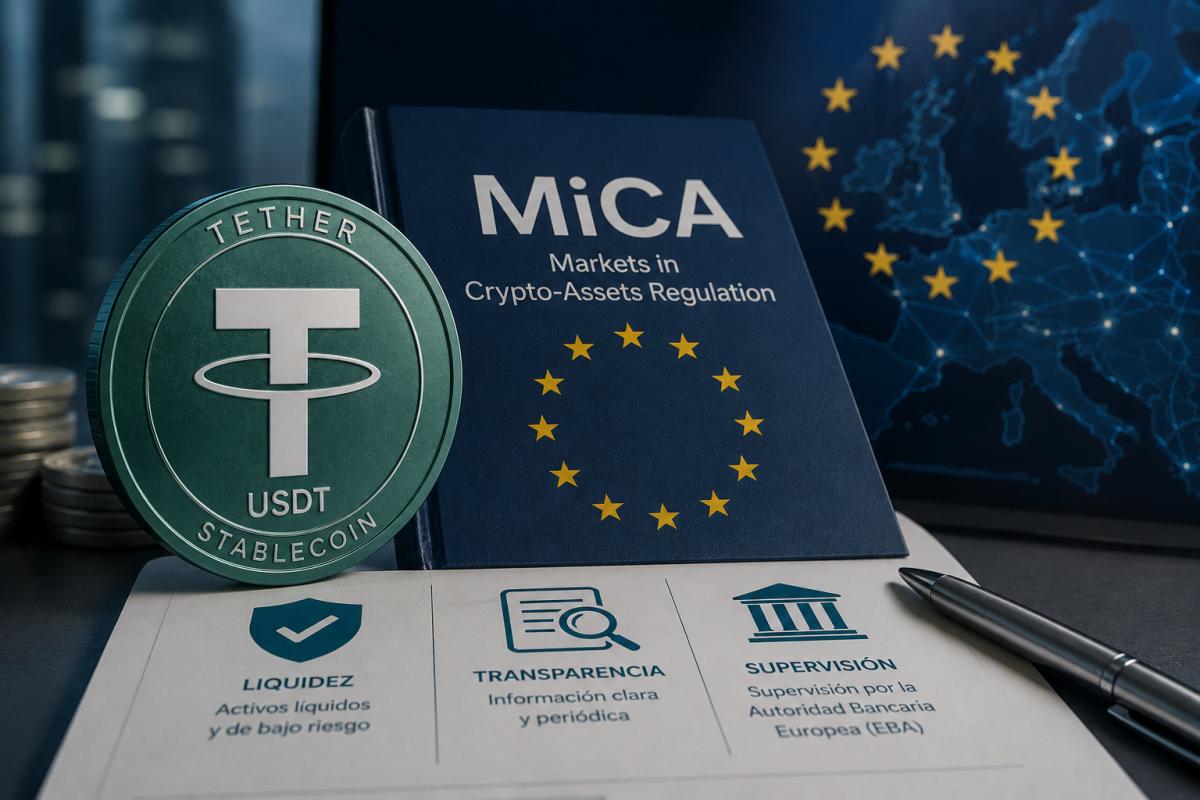
USDT vs MiCA: How European Regulation Is Reshaping the Stablecoin Market
USDT vs MiCA: A New Regulatory Landscape for Stablecoins
Author: Sergi Andrés
The implementation of the Markets in Crypto-Assets Regulation (MiCA – Regulation EU 2023/1114) represents a major milestone in the regulation of digital assets across the European Union.
Among its primary objectives is the regulation of stablecoins through enhanced requirements relating to liquidity, transparency and regulatory oversight.
This new framework has generated significant discussion regarding USDT, the stablecoin issued by Tether, currently the largest stablecoin by market capitalisation worldwide.
The Challenge MiCA Presents for Tether
Since 30 June 2024, stablecoin issuers operating within the European Union have been required to comply with the new MiCA framework.
As a result, Tether has been forced to reassess parts of its business model in order to maintain access to the European market.
The company has publicly expressed concerns regarding several aspects of the regulation, particularly those related to reserve composition requirements.
Liquidity Requirements
One of MiCA’s key requirements is that stablecoin reserves must consist of highly liquid and low-risk assets.
Tether has argued that this approach favours a reserve structure based on bank deposits rather than sovereign debt instruments.
However, MiCA does not prohibit the use of sovereign bonds, provided they meet the required liquidity and credit quality standards.
The objective of these provisions is to ensure greater stability and investor protection within the stablecoin ecosystem.
Transparency Obligations
MiCA requires issuers of significant stablecoins to provide regular and detailed disclosures regarding the composition of their reserves.
This requirement represents one of the most significant challenges for Tether, which has historically been criticised for its limited transparency compared to some competitors.
The European framework seeks to enhance investor confidence and reduce systemic risks associated with digital assets.
Supervision by the European Banking Authority
Stablecoins classified as significant are subject to direct supervision by the European Banking Authority (EBA).
This centralised supervisory model introduces greater regulatory oversight and establishes common standards across all European Union member states.
Compared to other jurisdictions, the European approach places a stronger emphasis on transparency, accountability and consumer protection.
Tether’s Response
Faced with this new regulatory reality, Tether has had two options:
Adapt its business model to comply with MiCA.
Accept the gradual delisting of USDT from major centralised exchanges operating within the European Union.
While competitors such as USDC embraced the new framework early on, Tether initially sought greater regulatory flexibility.
Ultimately, the company announced plans to develop products fully compliant with MiCA in order to preserve its presence in the European market.
Conclusion
MiCA clearly demonstrates the European Union’s commitment to building a more transparent, secure and regulated digital asset ecosystem.
Although the regulation introduces new challenges for market participants, it also provides stronger protections for users and enhances the legitimacy of the cryptocurrency sector.
The case of Tether illustrates how European regulation is reshaping the stablecoin market and accelerating the maturation of the broader blockchain industry.
¿Necesitas asesoramiento?
Nuestro equipo está listo para ayudarte.